Exposition

In 1962, as part of the city’s annual festival of the arts, modern sculpture was exhibited along a route across Spoleto’s piazzas and streets.  (A few remain.)

The exhibition was photographed by Ugo Mulas, a renowned artist.  My plan, a bit obvious, is to find a way to photograph each one.

The experiment’s only virtue, perhaps, is to limit the variables.  Twelve works, fewer weeks.  Little chance of getting around to them all.  (Or of getting back to the Wi-Fi, it seems.  I’m getting dizzy watching the little ball spin.  Until then…)
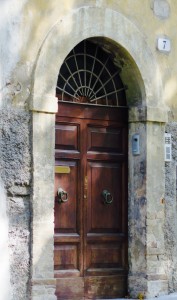
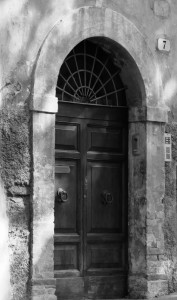
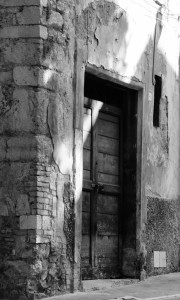
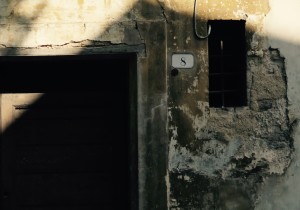
Next Doors

Subject, What Subject?

Fiddling While I Burn About the Wi-Fi

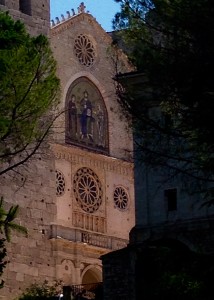
When we saw it for the first time, the Duomo came to us as a complete surprise: the street we were on fell away, into the piazza, with the grand church beyond.

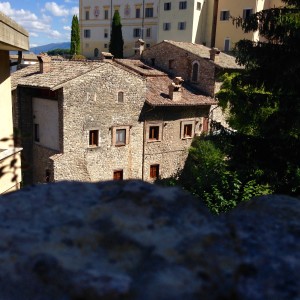
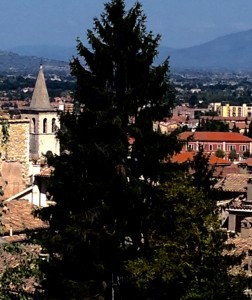
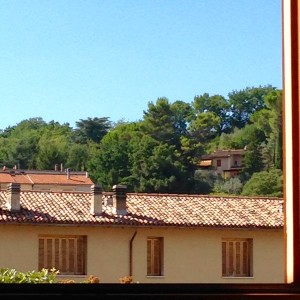
While we were out in plein air, this time, the Duomo came upon us as a complete surprise: cropping up beyond the trees, on the hillside, a sliver of the facade.

(Pictures to follow someday soon.  Someday soon.)

The Stories of Frescoes

Two of them hold me in thrall: 1) whatever story’s being told within the fixed image of the still; and 2) whatever stories experts know about the making of these works, together with their undoing over time, and their restoring in the present.  At these moments, a) I long for a tour guide; or, b) I fantasize about a traveling University, where one’s education occurs on the ground, at the scene of the action instead of on the board at the scene of a crime.

Post to follow techno travails: “A Window into the Fresco,” by yours truly.

En plein air

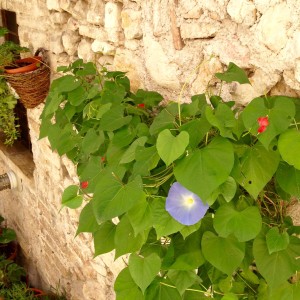
Out in the open air this morning, for art’s sake Rebecca may pardon my French:

Faux Frescoes

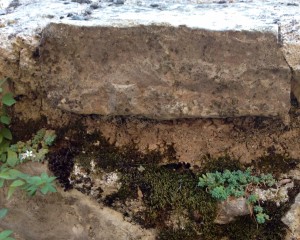
I seem to be adding to my genre studies on this trip. Flight flicks, e.g., as a quasi-alchemy of the transatlantic. Or today, the faux fresco outside the Info Center in Foligno. Not a discovery: I’ve shot these tricks before. But with renewed intensity: ever since we witnessed the deterioration on the walls of of the Church of Saints John and Paul.

And so, two reminders and an addition:

Plus, a few from the Chiesa dei SS. Giovanni e Paolo (actually, but one for now):

IMG_0131

Foligno, a different kind of town

Flat and new.

No straining up hills. Just be mindful of the bikes.

No distractions from clothes shopping. Just be wary of pockets picked.

Along the shady way from the train station, two photo ops:

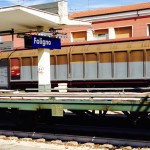
As weary shoppers find a short-cut home, it’s time to study historic tracks.

And to learn, once again, that the station sound system barely works.

Time to pay for the change of binario, if not for kind folks everywhere.

Day Tripping (for clothes)

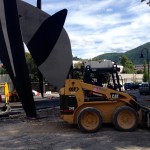
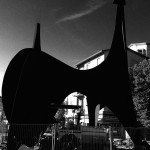
Coming out of the station, Day 1, a fence (with large piles of rubble beyond it) stood between us and the most imposing sculpture from the 1962 Sculptures in the City exhibition, Alexander Calder’s Teodelapio, a monumental stabile in iron (one of the largest such erections yet in modern sculpture), meant to act as a triumphant entrance to the hill town.

Day 9, taking our first leave to Foligno, I finally expected to get my photograph, the companion study to one of my earliest blogs this trip. I do not think that it was laziness, strictly, to take a week to settle in. The lesson to be drawn from today’s approach to the train station:

Take ‘em when you’ve got ‘em, boys, take ‘em when you’ve got ‘em.